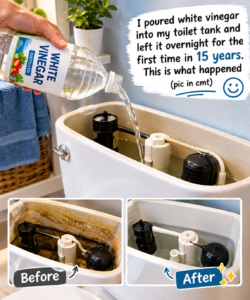
For years, I had cleaned my toilet the usual way. I scrubbed the bowl, wiped the outside, cleaned around the seat, and occasionally used a stronger bathroom cleaner when things looked particularly dirty. But there was one place I rarely thought about: the inside of the toilet tank. The tank lid stayed closed, so whatever was happening inside remained completely out of sight. One evening, I decided it was finally time to take a closer look. When I lifted the lid, I noticed a layer of discoloration and mineral buildup around the sides and components. It was not something I had expected to see after years of regular bathroom cleaning.
I had heard people talk about using ordinary white vinegar as a simple household cleaning solution, especially for mineral deposits and buildup caused by hard water. Instead of immediately reaching for a harsh chemical cleaner, I decided to try vinegar. I poured white vinegar into the tank and left it overnight. I wanted to give it plenty of time to work against the deposits rather than simply pouring it in and rinsing it away. Before going to bed, I closed the lid and left everything alone. I honestly had no idea whether I would notice much of a difference the next morning.
When I checked the tank the following day, the first thing I noticed was that some of the buildup appeared noticeably loosened. Areas that had looked stained and crusty were easier to wipe away. I used a cloth and a soft brush to remove the loosened residue, working carefully around the tank’s internal parts. It was not an instant transformation where everything magically disappeared, but the difference was enough to make me understand why people use mild acids such as vinegar against certain mineral deposits. The inside looked cleaner, fresher, and much less neglected than it had the night before.
What surprised me most was how easy the process felt compared with the complicated cleaning routines I had tried over the years. I had spent plenty of time cleaning visible parts of the bathroom while completely forgetting about the hidden area underneath the tank lid. That small discovery reminded me that household maintenance is often about the places we rarely see. A toilet tank can collect mineral deposits, sediment, and grime over time, particularly in areas with hard water. Regularly checking it can help you notice problems before they become more difficult to deal with.
There is one important thing to remember, though: vinegar is not automatically safe for every toilet tank component or every plumbing system. Rubber seals, gaskets, and other materials can react differently to cleaning products, so it is wise to check the toilet manufacturer’s recommendations before leaving vinegar sitting in the tank for an extended period. Never mix vinegar with bleach or other chemical cleaners, because dangerous fumes can result. For me, the biggest lesson was simply to stop ignoring the hidden parts of the bathroom. Sometimes a little attention to something you have not cleaned in years can reveal just how much buildup has been quietly collecting right under your nose.