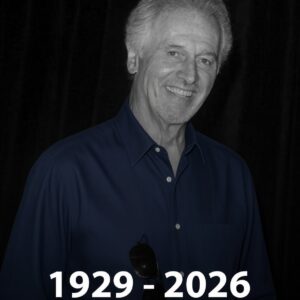
The message itself was ordinary, almost forgettable in its simplicity, the kind of closing sentiment exchanged countless times between parents and children without a second thought. “Love you, Dad.” There was no drama in it, no sense of urgency, no hint that it would carry a weight far beyond its few words. Yet when the news followed, it transformed that message into something sacred, a final thread connecting a father to a son whose presence would suddenly exist only in memory. In an instant, a family’s life divided into before and after, into moments when the world felt intact and moments when it felt permanently altered. Grief did not arrive with noise or spectacle but with a quiet finality that reshaped everything it touched. For Michael Madsen, a man known publicly for portraying hardened, unyielding characters, this loss stripped away every role and every performance, leaving only the raw, unguarded pain of a parent mourning a child. No level of success, experience, or strength prepares anyone for such a moment, because the loss of a son defies logic and resists consolation. It is a wound that exists beyond explanation, one that challenges the very idea that time alone can heal. In private, away from cameras and scripts, he faced a grief that had nothing to do with public image and everything to do with love, memory, and unanswered questions.
Hudson Madsen was not defined solely by the circumstances of his passing but by the life he lived and the character he carried with him. As a young Army sergeant, he embodied discipline, responsibility, and service, values that shaped his daily life and future plans. Those who knew him described a man who appeared steady, focused, and committed, someone who took pride in his role and the responsibilities that came with it. He was building a life with his wife, making plans, and moving forward with a sense of purpose that suggested resilience and direction. From the outside, there was little to indicate the depth of what he carried internally. Like many who serve, Hudson understood structure and duty, often placing the needs of others and expectations of strength above his own vulnerabilities. His life reflected commitment, not chaos, and that is precisely why the loss resonated with such shock among those who knew him. It challenged assumptions about what struggle looks like and who is affected by it. Strength, as it turns out, does not always protect against pain, and discipline does not silence inner battles. His story reminds us that the image people present to the world is often only a fraction of what they experience privately.
Those closest to Hudson have spoken carefully, emphasizing uncertainty rather than conclusions, and compassion rather than judgment. He had been facing personal health challenges that weighed heavily on him, struggles that did not always surface in conversation or behavior. Like many individuals, especially those trained to endure hardship, he did not openly share the full extent of what he was feeling. This silence is not uncommon, and it is often mistaken for stability. Friends and family described shock rather than warning signs, confusion rather than clarity. There were no dramatic signals, no obvious red flags that pointed unmistakably toward what would happen. This absence of certainty is part of what makes grief so complex, leaving loved ones searching for understanding while knowing that some questions may never have clear answers. The lack of visible struggle does not mean the absence of pain, and Hudson’s passing underscores how internal battles can remain hidden even from those who care deeply. It challenges the belief that we can always tell when someone is suffering and highlights how easily pain can exist behind composed expressions and responsible lives.
In the days that followed, Michael Madsen released a statement that carried both sorrow and intention, speaking not as an actor but as a grieving father. His words reflected love, disbelief, and an aching desire to protect others from experiencing a similar loss. Rather than focusing solely on grief, he urged awareness, compassion, and attentiveness, emphasizing the importance of listening and recognizing that suffering is not always visible. His message was not polished or performative but deeply human, shaped by shock and love rather than public expectation. It served as a reminder that even families who appear strong, successful, or resilient are not immune to tragedy. In sharing his pain, he opened a door for conversation about mental health, emotional well-being, and the necessity of taking struggles seriously, even when they are quietly held. The statement did not offer solutions or explanations, because none truly exist in moments like these. Instead, it offered honesty, a recognition that loss changes everything, and a hope that speaking openly might help someone else feel less alone in their own darkness.
The story of Hudson’s life and passing resonates far beyond one family because it reflects a reality many quietly live with. Countless individuals navigate personal challenges while maintaining the appearance of strength, responsibility, and success. They fulfill roles, meet expectations, and reassure others that they are fine, even when the weight they carry feels overwhelming. Society often praises resilience without acknowledging the cost of constant endurance, especially among those taught to suppress vulnerability. Hudson’s story highlights how essential it is to create spaces where honesty is welcomed rather than feared, where asking for help is seen as courage rather than weakness. It reminds families, friends, and communities to check in not only during visible crises but also during ordinary moments, when a simple conversation can make a difference. Listening without judgment, offering support without pressure, and staying connected without assumptions become acts of care that matter more than grand gestures. Awareness is not about fear, but about presence, about recognizing that everyone’s inner world deserves attention and compassion.
As the family moves forward, they do so carrying love, memory, and grief together, knowing that none cancels out the other. Hudson is remembered not just through loss, but through the life he lived, the service he gave, and the love he shared with those closest to him. The final message he sent remains a quiet echo of connection, a reminder that love often speaks most clearly in ordinary words. While the pain of goodbye does not fade quickly, it exists alongside a deeper understanding of what truly matters. This story is not only about mourning a precious son, but about honoring humanity in all its complexity, acknowledging hidden struggles, and choosing compassion over assumptions. In remembering Hudson, there is also a call to care more deeply, listen more closely, and remain aware that behind every composed exterior may be a heart carrying more than it shows. In that awareness, his memory continues, shaping conversations, encouraging connection, and reminding us that love, once given, never truly disappears.