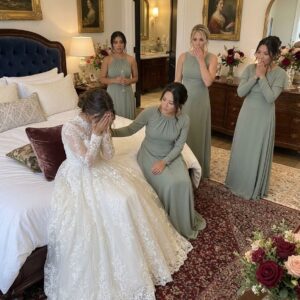
I turned pale when I saw the small wooden box clutched tightly in her hands. My stepmother sat on the edge of the bed, tears streaming down her face, the box trembling as she tried to open it. My husband stood frozen beside me, his earlier urgency now replaced by quiet confusion. Inside the box were dozens of carefully folded letters, all written in my father’s familiar handwriting. She looked up at me with red eyes and whispered, “He never stopped loving your mother… or you.”
The letters revealed a side of my father I had never known. He had written to her for years after their marriage, confessing his guilt over remarrying so soon and explaining that he had secretly set aside money for her in a private account no one else knew about. He feared our family would reject her completely if he left everything openly in her name. The account details were tucked inside the final letter, along with a note asking her to give the letters to me if she ever needed help. My hands shook as I read his words. He had not abandoned her. He had protected her the only way he believed he could.
When I showed the letters to my family the next morning, the room fell silent. My siblings, who had spent years criticizing her, sat in stunned disbelief. The bitterness that had poisoned our home for so long began to crack. One by one, they apologized—not perfectly, not easily, but sincerely. My stepmother accepted their words with quiet grace, never demanding more than simple respect. That evening we all sat around the table together for the first time, sharing stories of my father instead of arguments.
Over the following months she slowly regained her strength. We helped her access the hidden account, and she used part of it to create a small memorial garden for both my parents. She never tried to take their place. She simply lived among us with quiet dignity. My children began calling her “Grandma” without being told to. The house that once felt divided by old resentment started to feel whole again.
Looking back, I understand why my family warned me. They were protecting old wounds. But sometimes the right choice is the one that feels uncomfortable at first. Bringing her home did not destroy us. It forced us to face the truth my father left behind and, in doing so, healed wounds we had carried for years. She is still with us today—no longer living in misery, no longer alone, and no longer a stranger in the house she once feared would never accept her.