My hands trembled as I opened the envelope beside Margaret’s grave. Inside was a photograph of a young woman standing outside an old brick house, a handwritten letter bearing Margaret’s signature, and a document with my name printed across the top. “Before you read anything else,” the lawyer said quietly, “you need to understand that Margaret spent nearly sixty years looking for someone she believed she had lost forever.” I stared at him, confused. “What does that have to do with me?” He glanced toward the empty cemetery road. “Everything. Margaret knew who you were long before you ever walked into that hospice.” My stomach tightened as I unfolded the letter. The first sentence read, “If you are reading this, then I have finally fulfilled my last wish, and you deserve to know the truth about the woman you married.”
The letter explained that Margaret had once been engaged to a young man named Daniel, decades earlier, before a terrible misunderstanding separated them. They had planned to marry, but shortly before their wedding, Daniel disappeared from her life. Margaret later learned that his family had moved away, and every attempt she made to find him failed. She never married anyone else, not because she had stopped believing in love, but because a part of her had remained attached to the future they had imagined together. Years later, she discovered that Daniel had died, leaving behind a son. That son had grown up, married, and eventually become my father. I read the paragraph twice, unable to comprehend what it meant. The lawyer nodded slowly. “Margaret was your father’s biological aunt. She was also the person who helped pay for his education when he was young, although she did so anonymously.” Suddenly, her interest in my childhood stories, my father’s name, and the old photographs I had once mentioned began to make sense.
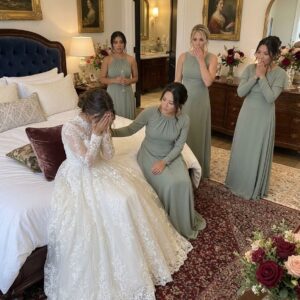
I remembered one afternoon when Margaret had asked me about my father’s childhood. I had told her he was raised by a hardworking single mother after his father died unexpectedly. She had become unusually quiet that day, then asked whether I still had any family photographs. I had shown her a picture of my father standing beside my grandmother. Margaret had stared at it for so long that I assumed she was simply remembering someone from her own past. Now I understood why her eyes had filled with tears. She had recognized my family. Yet the lawyer explained that Margaret had never wanted to approach me with the truth immediately. She worried that I might feel obligated to care for her because of a family connection rather than genuine affection. She wanted to know whether I would spend time with her simply because I enjoyed her company. “The wedding,” he added, “was never a condition of her estate. It was something she wanted for herself, and you gave her that happiness without asking for anything in return.”
The lawyer then handed me another document. Margaret had established a charitable trust years earlier, using much of the money she had accumulated through careful investments and the sale of inherited property. She had left instructions for the trust to support hospice patients who had no visitors, no family support, and no money for small comforts that could make their final days more meaningful. She had also left me a modest personal inheritance, along with her collection of books and the old house pictured in the envelope. “She wanted you to decide what should happen to the house,” the lawyer explained. “She believed it could become something meaningful rather than remain an empty building.” I looked down at the photograph again. The house stood on a quiet street beneath a large oak tree. On its back, Margaret had written a simple message: “A home should never be a place where someone has to feel forgotten.” I realized then that her greatest wish had never been only about wearing a wedding dress. She had wanted to leave the world knowing that kindness could still create family, even after years of loneliness.
Several months later, I visited the house for the first time. Dust covered the windowsills, the garden had grown wild, and the front door creaked when I pushed it open. Yet the place felt strangely welcoming. In a small upstairs bedroom, I found boxes of letters, family photographs, and a carefully preserved wedding invitation Margaret had never sent. I contacted the hospice director and proposed turning the house into a volunteer-supported residence where patients without regular visitors could receive companionship, read books, celebrate birthdays, and spend time with people who genuinely cared about them. With the trust’s support and the help of local volunteers, the idea gradually became reality. We called it Margaret’s House. On the opening day, I placed her wedding photograph above the fireplace, showing her smiling in her white gown with her hand raised to display her ring. People often asked why an unmarried man had chosen to marry an elderly hospice patient. I never felt the need to explain every detail. I simply told them that Margaret had wanted one beautiful day, and I had been fortunate enough to give it to her.
A year after Margaret’s funeral, I returned to her grave carrying a bouquet of white flowers. I told her about the house, the patients who had found companionship there, and the volunteers who now spent their weekends making sure nobody felt forgotten. Then I placed a copy of the photograph beside the flowers and whispered, “You were right, Margaret. Family isn’t always the people who share your home or even the people who know your name. Sometimes, it’s the person who sits beside you when everyone else has gone.” As I walked back toward my car, I thought about the strange path that had brought us together. I had entered the hospice believing I was simply giving my time to someone nearing the end of her life. Instead, Margaret had given me a deeper understanding of compassion, belonging, and the quiet ways people can change one another. Her lawyer had been right about one thing: she hadn’t chosen me by accident. She had recognized something in me that she had spent a lifetime hoping still existed in the world. And although her life had ended, the kindness she entrusted to me was only beginning.