The Will I Rewrote Alone Became the Loudest Word I Ever Spoke to My Children

I did not know. Nathaniel retrieved the envelope from a locked drawer, my husband’s handwriting unmistakable across the front. My hands, which had stopped trembling in the lawyer’s office, began to shake again. Edmund had known. Somehow, in his final year, my gentle husband had seen what I had refused to see, that our children’s love was measured entirely by what we could give them, and that the moment we could give nothing more, they would vanish.

Inside the letter, Edmund wrote that he had watched them take and take while calling it love, and that he could not bear to say aloud what he feared, because he did not want to break my heart while he was still alive to see it. If they came to bury him, the letter said, then he had been wrong, and I should forgive them and give them everything. But if they did not come, then I would finally be free to stop paying for affection that had never been real. He asked only that I use the money to live, at last, as Rosalind.

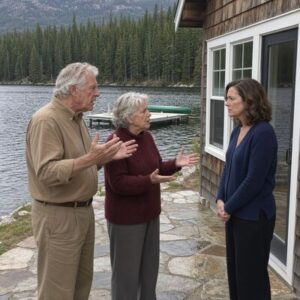
Nathaniel and I spent the rest of that morning rewriting everything. The house, the lake cabin, the investment account of nearly two hundred fifty thousand dollars, none of it would go to Julian or Beatrice. Instead, Edmund and I would fund a scholarship at the library where I had filed books until my hands ached, in both our names. A portion would go to the pastor’s small congregation that had prayed over my husband when his own children would not. And the rest would finally send me on the vacations I had skipped for half a century.

Julian called eleven days later, only because a birthday was approaching and he assumed a check would follow as it always had. I told him about the funeral he missed, the letter his father left, and the will that no longer bore his name. There was a long silence, then anger, then the familiar pivot to guilt. But I had heard that chorus my whole life, and for the first time, I simply set the phone down. I had stood alone at the end for Edmund. Now, at seventy-five, I would finally stand for myself.

Aria Lexicon is the pen name of the writer and editor behind The Daily Signal, a site for original short fiction about families, grudges, awkward neighbors and the small decisions that turn into big ones. Every story is invented; every character is made up. When She isn't writing, She's reading other people's stories and trying to figure out why the good ones work.

Related Posts

What The Handwritten Pages Said, And Why It Took Me Almost A Year To Understand What He Had Actually Given Me

The first line was my father’s handwriting. Not similar to it. It was his, the same cramped loop on the letter D, the same habit of never…

What Was Actually Sitting On My Coffee Table That Afternoon, And The Long Quiet Year It Took Us To Recover

I did not raise my voice. I asked Douglas to hand me the top folder, and he did, because men like Douglas have never once been told…

What The Document Beside His Plate Actually Said, And How One Quiet Winter Changed Everything I Believed About My Own Family

My father read the first page twice before he understood it, and when he reached the clause, his hand went flat against the table like a man…

What The Months After That Afternoon On The Cliffs Taught Me About Doors, Keys, And The People Who Finally Knocked

I did not look at the keys until the van was gone. When I did, I understood why my hand had been shaking. The brass compass tag…

What The Weeks After That Phone Call Taught Me About Property, Loyalty, And The Difference Between Being Useful And Belonging

He hung up on me. Four minutes later, Claire called from the gravel road, and she was the one who told me the truth. The retreat had…

Three Years Of Six Months, And A Woman Deciding The Bed My Wife Died In Was Hers To Reassign

The declined card was only the first thing to go wrong for them, and I did not answer any of the six calls, because I was already…

Leave a Reply

Your email address will not be published. Required fields are marked *