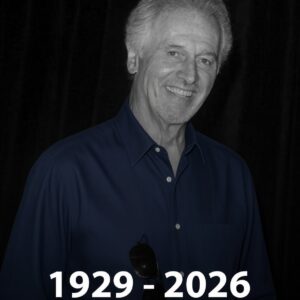
Barron Trump’s life has always existed in the tension between private experience and public fascination. Born into a family constantly under the media microscope, he has had to reconcile the natural rhythms of childhood with the unrelenting curiosity of the world around him. Even simple actions—walking down a street, attending school, or sharing a quiet moment with family—carry amplified meaning, interpreted and broadcast as if they define the individual himself. In moments of profound loss, this scrutiny becomes especially intrusive, transforming private grief into spectacle. A funeral, which might ordinarily offer space for reflection and mourning, is instead dissected, photographed, and analyzed, turning the personal into a symbolic narrative he never chose.
Growing up behind the carefully managed boundaries set by his parents, Barron has relied on the small constancies of life to anchor him. Family routines—shared meals, bedtime rituals, and moments of private conversation—offered refuge from the relentless gaze of the public eye. These daily structures, though unremarkable to outsiders, were essential in shaping a sense of normalcy, giving him a foundation from which to develop his own identity. In an environment where visibility is constant, even ordinary domestic patterns become acts of subtle resistance, a quiet assertion of the right to experience life outside of media narratives.
Barron’s connection to family heritage has also offered an additional layer of perspective and grounding. Exposure to multiple languages, cultural practices, and intergenerational knowledge provided him with alternatives to the expectations imposed by public attention. These ties have created spaces where he can inhabit a self apart from the headlines, a private life where curiosity and grief are processed without commentary. When confronted with loss, he encounters it first as personal experience—a closing of familiar doors and the reshaping of daily realities—rather than as a public performance to be judged or interpreted.
In the face of external pressures, Barron has demonstrated a disciplined restraint. Choosing to step back from media spectacle is itself an assertion of autonomy. In a world that rewards visibility, he exercises the difficult act of withdrawal, protecting the emotional and psychological space needed to navigate formative experiences. By creating these boundaries, he signals to himself and others that he is more than a symbol: he is an individual entitled to the slow, private work of growing, learning, and processing emotion on his own terms.
The lessons in this quiet approach extend beyond celebrity or politics. In an era dominated by social media and constant exposure, Barron’s insistence on privacy models a form of resilience that emphasizes patience, self-definition, and measured interaction with the world. Each decision to maintain distance reinforces the principle that identity and grief are not commodities for public consumption. Even as public curiosity persists, he demonstrates that personal agency and deliberate self-preservation remain possible, carving out a domain where he can engage with life authentically.
Ultimately, Barron Trump’s navigation of grief under scrutiny reveals a careful balancing act between presence and privacy, engagement and retreat. He embodies the challenge of maintaining personal integrity amid constant observation, showing that quiet resilience and thoughtful boundaries can preserve humanity even when external forces seek to reduce private experience to public spectacle. In doing so, he offers a reminder that growing up in the spotlight need not erase individuality, and that the cultivation of p