A devastating aviation accident off the coast of Honduras has sent shockwaves through the country and far beyond its borders, after a passenger aircraft crashed into the sea shortly after takeoff from Roatán Island, killing twelve people. Among the victims was Aurelio Martínez, an internationally celebrated Garifuna musician whose cultural influence extended well beyond Central America. The crash transformed a routine domestic flight into a national tragedy within minutes, leaving families grieving, fans stunned, and authorities racing against time under dangerous conditions. As details slowly emerged, the scale of the loss became clear, highlighting not only the human cost of the disaster but also the vulnerabilities inherent in short-haul island aviation routes, where weather, terrain, and limited response windows can combine with deadly consequences.
The aircraft, operated by Lanhsa Airlines, had departed from Roatán International Airport bound for La Ceiba on the Honduran mainland. On board were three crew members and fourteen passengers, including children and foreign nationals. Moments after takeoff, the plane went down just offshore, approximately one kilometer from the runway, plunging into waters made treacherous by strong currents and poor visibility. Local police later confirmed twelve fatalities, including two children, a French citizen, and a citizen of the United States. Early confusion over passenger numbers and survival underscored the chaos that often follows sudden aviation disasters, particularly in remote or maritime environments where access is limited and information is fragmented.
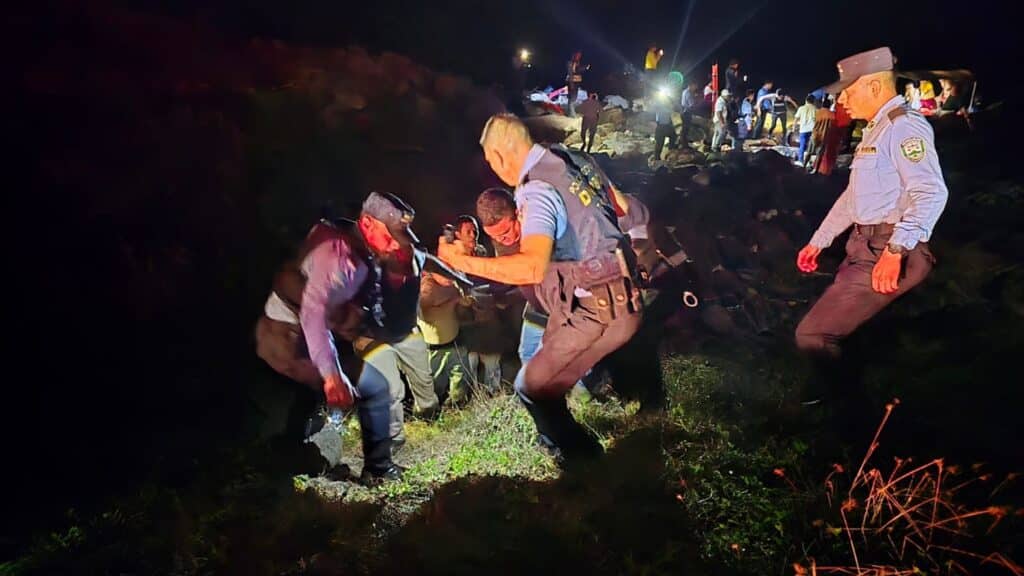
As night fell, the rescue and recovery operation unfolded under extremely challenging circumstances. Images from the scene showed firefighters and emergency workers wading into dark waters with torches, battling rough seas and unstable weather conditions. Fire chief Franklin Borjas described the environment as exceptionally difficult, noting that waves, wind, and limited visibility severely hampered efforts to locate victims and wreckage. Despite these obstacles, responders pressed on, driven by urgency and the possibility that someone might still be alive. The emotional toll on first responders was evident, as the operation shifted from rescue to recovery, a transition that carries its own psychological weight, especially when children and public figures are among the dead.
The Honduran government responded swiftly at the highest level. President Xiomara Castro activated the Emergency Operations Committee, mobilizing a coordinated, multi-agency response that included firefighters, armed forces, civil protection authorities, police, health services, aviation officials, and the Red Cross. Castro confirmed that emergency units reached the crash site quickly and that hospitals in La Ceiba and San Pedro Sula were placed on high alert to receive any survivors. Her public statements reflected both national grief and institutional resolve, emphasizing that every available resource was being deployed. In moments like these, decisive coordination can make the difference between life and death, and the rapid activation of emergency structures signaled the gravity with which the government viewed the disaster.
Beyond the immediate tragedy, the crash has raised pressing questions about aviation safety, particularly in regions that rely heavily on small aircraft to connect islands with the mainland. Short takeoff and landing conditions, variable weather, aging fleets, and limited infrastructure can significantly increase risk, even for experienced pilots. While investigations are still in their early stages, aviation experts have pointed out that crashes occurring shortly after takeoff often involve a complex interaction of mechanical performance, environmental conditions, and time-critical decision-making. The proximity of the crash to the airport suggests that there was little margin for recovery once something went wrong, a reality that underscores the unforgiving nature of flight operations in coastal and island settings.
The death of Aurelio Martínez has added a profound cultural dimension to the loss. Widely regarded as one of the most important ambassadors of Garifuna music and identity, Martínez was more than an entertainer; he was a symbol of heritage, resilience, and artistic pride. His passing has prompted an outpouring of grief from musicians, cultural institutions, and fans around the world, many of whom credit him with bringing Garifuna traditions to international stages. For Honduras, the crash is not only a transportation disaster but a cultural wound, removing a voice that carried history, language, and identity across generations. As investigations continue and families begin the long process of mourning, the tragedy stands as a stark reminder that behind every aviation statistic are lives, stories, and legacies abruptly cut short.