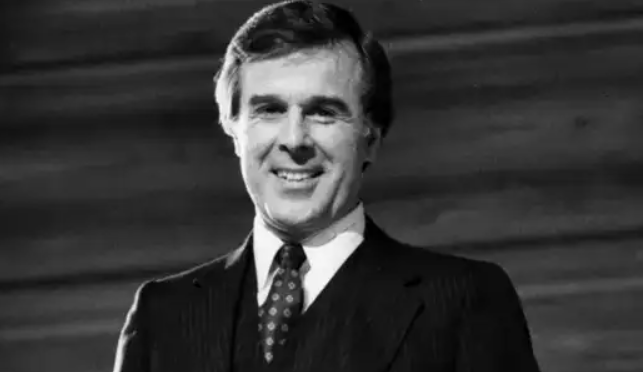
For nearly seventy years, John Cunningham occupied a rare and honorable place in American performance, one defined not by celebrity but by trust. Audiences trusted him to anchor a scene, directors trusted him to elevate material, and fellow actors trusted him to listen, respond, and make the shared work better. When news spread that he had died at the age of ninety-three at his longtime home in Rye, New York, the response was not loud or theatrical, but deeply affectionate. Cunningham was the kind of actor people felt they knew, even if they could not immediately place his name. His face carried familiarity, his voice carried reassurance, and his presence carried weight without demanding attention. In an industry often driven by visibility and momentum, his career unfolded patiently, guided by craft and consistency rather than ambition for fame. He became, over time, a symbol of professionalism itself, someone who proved that longevity is built not on spectacle but on reliability, humility, and devotion to the work.
The theater was always the center of Cunningham’s artistic life. Broadway was not a stepping stone for him but a home, a place where discipline and collaboration mattered more than image. Across fifteen Broadway productions, he helped shape some of the most influential works of modern American theater, appearing in landmark shows such as Company, Cabaret, Zorba, 1776, Titanic, The Sisters Rosensweig, and Six Degrees of Separation. These were productions defined by complexity, moral tension, and emotional nuance, and Cunningham thrived in that environment. He was known for approaching every role, large or small, with equal seriousness, believing that no character existed merely to fill space. Colleagues often recalled that scenes seemed to deepen when he entered them, not because he demanded focus, but because he listened so intently that others rose to meet his level of commitment. His performances were rarely showy, but they were precise, grounded, and emotionally honest, the kind that lingered long after the curtain fell.
While theater remained his foundation, Cunningham’s work in film and television expanded his reach across generations. Moviegoers recognized him as the warm, steady father in Mystic Pizza and as Ethan Hawke’s father in Dead Poets Society, roles that required restraint more than dramatics. He brought credibility to authority figures and tenderness to parental roles, avoiding caricature in favor of quiet realism. His filmography included appearances in School Ties, Nixon, The Jackal, and Shaft, projects varied in tone and scale but united by his consistent ability to inhabit a role fully, no matter the genre. On television, he became a familiar presence through repeated appearances on Law & Order and work on shows like 30 Rock, The Good Wife, and Damages. These performances reflected his adaptability, showing that his craft translated seamlessly across formats without losing its integrity. Even when appearing briefly, he left an impression of lived-in humanity, a sense that the character existed beyond the edges of the scene.
Cunningham’s versatility extended beyond live action into voice work, where his measured delivery and thoughtful pacing added depth to moments that might otherwise have passed unnoticed. He understood that acting was not about dominating attention but about serving story, tone, and rhythm. This philosophy shaped not only his performances but also his relationships within the industry. Younger actors often described learning from him simply by watching how he prepared, how he treated stage managers and crew, and how he approached rehearsal as a space for discovery rather than ego. He did not chase trends or reinvent himself to remain relevant; instead, relevance followed naturally from his reliability. Directors knew what they were getting when they cast him: a professional who would show up prepared, respect the ensemble, and honor the audience’s intelligence. In an era increasingly driven by speed and spectacle, his career stood as a reminder of the enduring value of patience and precision.
Beyond performance, Cunningham believed deeply in the responsibility artists have to their communities. He supported arts education initiatives in his local area and participated in programs designed to bring writers, performers, and live theater experiences to students who might not otherwise encounter them. He understood firsthand how transformative exposure to the arts could be, not as a pathway to fame, but as a means of developing empathy, discipline, and self-expression. Those who worked with him in these programs recall a man who spoke to students with respect, never talking down, never presenting his career as extraordinary, but emphasizing curiosity and commitment. He viewed art as a shared civic space, something that belonged to everyone, not just professionals or critics. This belief guided how he lived as much as how he worked, grounding his public life in service rather than self-promotion.
At home, John Cunningham was known not as a performer but as a devoted husband, father, and grandfather. Family remained central throughout his long career, providing balance in a profession that often demands sacrifice. He guarded his private life carefully, not out of secrecy but out of reverence, choosing presence over publicity. Those closest to him describe a man who valued conversation, routine, and quiet humor, someone who found satisfaction not in accolades but in continuity. His death marks the end of a remarkable life, but not the end of his influence. That influence lives on in the countless productions he shaped, the actors he quietly mentored, and the audiences who felt, even without knowing his name, that something real had just occurred on stage or screen. In remembering John Cunningham, we remember a standard of artistry rooted in respect, endurance, and humanity, a legacy that proves lasting impact does not require constant attention, only unwavering dedication to the truth of the work.