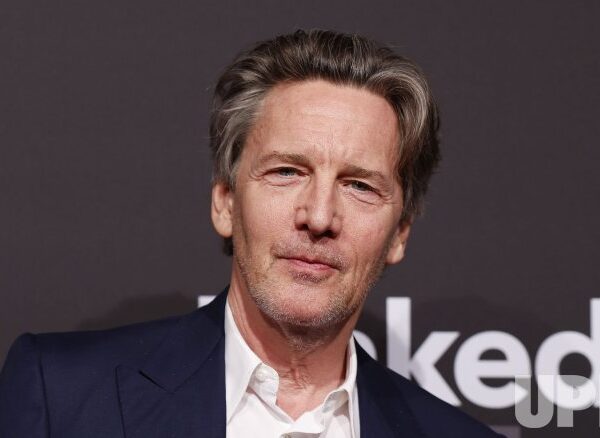
In the 1980s, Andrew McCarthy seemed to exist exactly where popular culture wanted him. His face was everywhere, his presence instantly recognizable, his appeal effortless. With dark, slightly messy hair and a gentle, introspective demeanor, he stood apart from louder, flashier stars of the era. He wasn’t just admired; he was trusted by audiences. Teenagers projected their hopes onto him, while critics sensed a quiet intelligence behind his performances. Yet even as he became a symbol of youthful romance and sensitivity, the life unfolding behind the scenes was far less polished. Long before red carpets and magazine covers, McCarthy was a reserved boy growing up in Westfield, New Jersey, the third of four brothers in a working-class household. His parents valued responsibility and routine, and nothing about his childhood suggested a future in Hollywood. Still, he felt drawn to performance early on, discovering that the stage offered him something real life often didn’t: clarity, confidence, and a sense of belonging. Acting became not just an ambition, but a refuge.
That sense of refuge followed him to New York University, where he enrolled to formally study acting. Yet structure and discipline proved difficult for him. Classes felt confining, expectations rigid, and he drifted away from the academic system meant to support him. After two years of skipping classes and disengaging from formal study, he was expelled, a moment that could have ended his dreams altogether. Instead, it became an unlikely turning point. Shortly afterward, he answered a newspaper casting call for the film Class. Against hundreds of hopefuls, he landed the role, suddenly sharing the screen with Jacqueline Bisset and stepping into a world he barely understood. Fame arrived not gradually, but all at once. One week he was an uncertain former student; the next, he was a working actor navigating press attention, expectations, and a lifestyle that rewarded confidence even when he felt anything but.
By the mid-1980s, McCarthy’s career accelerated rapidly. St. Elmo’s Fire placed him firmly in the spotlight and linked him to the so-called Brat Pack, a label that brought recognition but also pressure. While the group became a cultural phenomenon, McCarthy often felt boxed in by the image, sensing that the label reduced his work to a trend rather than a craft. Still, his performances resonated. In Pretty in Pink, he offered a quieter counterpoint to the heightened emotions of teen cinema, delivering vulnerability without spectacle. Films like Mannequin and Weekend at Bernie’s cemented his place as a bankable star, but the attention came with an invisible cost. As his public image grew brighter, his private struggles deepened. Alcohol, which had once eased his social anxiety, became a constant companion. It helped him feel comfortable in rooms full of people, confident in situations that otherwise terrified him, but it also slowly took control.
Behind the calm exterior audiences adored, McCarthy was unraveling. He has spoken openly about showing up to sets hungover, carrying anxiety and shame while playing characters defined by composure and charm. Alcohol blurred the line between coping mechanism and dependency, and although he experimented briefly with drugs, it was drinking that truly consumed him. Fame magnified everything: the expectations, the scrutiny, the fear of failure. By his late twenties, the chaos became impossible to ignore. In 1992, at just 29 years old, he entered detox, confronting the reality that his life was no longer sustainable. Sobriety was not a single decision but a continuous commitment, one that forced him to reassess his identity beyond being a heartthrob. It stripped away the illusion that success alone could provide stability or happiness.
What followed was not a disappearance, but a reinvention. Free from the need to maintain an image, McCarthy began exploring storytelling in broader ways. He moved into directing, bringing empathy and nuance to television series such as Orange Is the New Black and Gossip Girl. Behind the camera, he found a new kind of fulfillment, guiding performances rather than carrying them alone. At the same time, he discovered another voice entirely through writing. Travel became both literal and metaphorical, offering distance from his past and perspective on his present. As a contributor and editor-at-large for National Geographic Traveler, and a writer for major publications, he learned to observe the world with patience and humility. His books, including Brat: An ’80s Story and The Longest Way Home, reflect a man unafraid to examine his flaws, his growth, and the quiet beauty of starting over.
Today, Andrew McCarthy’s life feels deliberately grounded. He is a father of three, a husband, a creator who values presence over applause. While audiences still associate him with iconic films, he no longer lives in nostalgia. He acknowledges the cultural impact of his early work without allowing it to define him. His story resonates because it dismantles the myth that fame is the ultimate destination. Instead, it reveals a far more human truth: that meaning is built through self-awareness, resilience, and the courage to change direction when the old path no longer serves you. The boy who once embodied every teenage crush grew into a man who chose honesty over illusion, depth over surface, and a life fully lived over one merely admired.