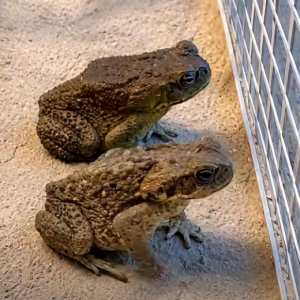
Beyond their sudden appearance, toads actually serve an important ecological function in residential environments. They act as natural pest controllers by feeding on mosquitoes, flies, beetles, and other insects that can become problematic for humans and plants. Their presence can indicate that a yard has a relatively healthy ecosystem with sufficient moisture and biodiversity to support wildlife.
Instead of signaling danger or infestation, toads often reflect balance in the surrounding environment. Culturally, they are also associated with transformation due to their life cycle from tadpoles to adult amphibians, symbolizing adaptation and renewal in many traditions. While some may feel uneasy encountering them,
they are harmless, non-aggressive creatures that contribute positively to natural pest control and environmental stability. Observing them can encourage greater awareness of outdoor ecosystems and how human spaces overlap with wildlife habitats. Rather than viewing them as a problem, understanding their behavior reveals how seasonal changes,
food sources, and environmental conditions naturally bring them closer to human homes.